How does natural slate compare with other roofing materials?
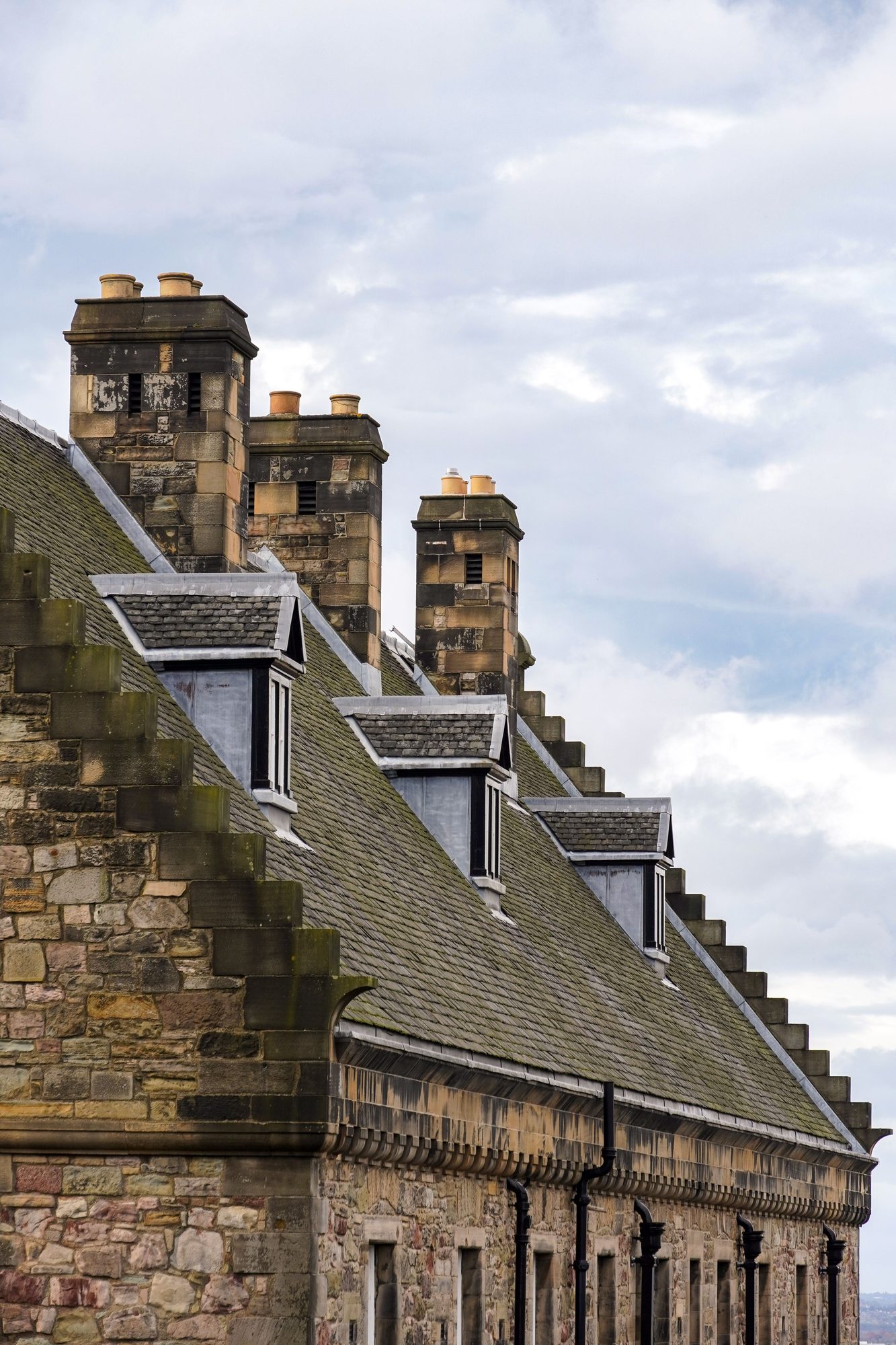
Natural slate is generally longer lasting and lower in embodied carbon over a roof’s full lifespan than concrete tiles or synthetic slate alternatives, largely because it can last so much longer before needing full replacement, as discussed in our slate lifespan guide. In Edinburgh specifically, planning and listed building rules covered in our planning permission guide also mean natural slate is very often the only material permitted on a historic roof, regardless of the comparison on its own merits.
Natural slate
Long lifespan, capable of being repaired slate by slate rather than requiring wholesale replacement, and, in Edinburgh, frequently the only material a listed building or conservation area property is permitted to use. Its main drawback is that sourcing a well matched slate for repairs can take more care than a mass produced alternative, as covered in our sourcing guide.
Concrete tiles
Concrete interlocking tiles are cheaper and widely used on modern construction, but they are heavier, generally shorter lived than good natural slate, and rarely permitted as a replacement material on listed buildings or within Edinburgh’s conservation areas, since they change the roof’s appearance and do not replicate slate’s thin, layered profile.
Synthetic slate
Synthetic or composite slate products aim to replicate the appearance of natural slate at a lower weight and cost. Performance and longevity vary a great deal between products, and, as with concrete tiles, they are frequently not accepted as an appropriate replacement material on listed or conservation area buildings in Edinburgh.
Embodied carbon
Historic England’s research into the embodied carbon of roofing slate has examined how a slate roof’s very long service life affects its carbon footprint compared with shorter lived alternatives that need replacing more often. That research is a useful independent reference point for anyone weighing up materials on environmental grounds, separate from the planning considerations that, in Edinburgh, very often settle the question anyway.
Email us photos of the roof and what floor it’s on, or how many levels up it is, and we’ll tell you what we need to give you a price.
Weighing up materials for a repair or extension?
Email us photos of the roof and what floor it’s on, or how many levels up it is, and we’ll tell you what we need to give you a price.
Email us about your roof